Shade factor, hail mesh, insect airflow, bird mesh, backstop density and sports ply — the six decisions that determine whether a net performs for a decade or fails in the first season.
Shade factor is a light-transmission measurement, not a colour or a weight. A 70% net lets roughly 30% of incident light through, but because transmis…
Hail nets fail for two reasons: the aperture is too large to break up the stone, or the structure is too slack to absorb the impact. A 2.5 × 3.5 mm cr…
Every insect screen trades airflow for exclusion. A 40-mesh (0.35 mm) thrips screen can cut airflow by 45–50% against an open vent, which raises humid…
Mesh size follows the bird. Sparrows and finches need 19 mm; pigeons and gulls need 40–50 mm because they are larger and push at the net rather than s…
The industry has settled around 550 g/m² for modern compound bows; lighter 350–450 g/m² nets are common at the low end but pass arrows sooner and wear…
Ply is the number of yarn strands in each net strand. 36-ply is light ball-stop for gardens and low-impact training; 48-ply is the standard club grade…
Guide
How to read a shade-factor number (and why two 70% nets differ)
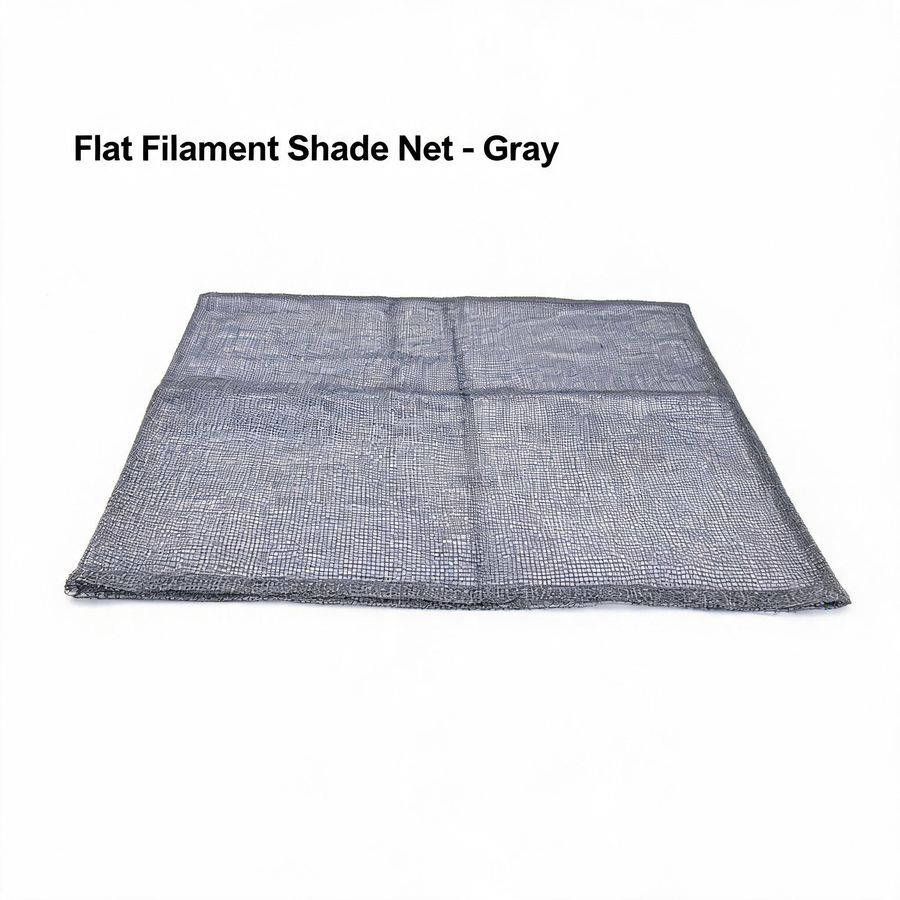
Gray flat-filament HDPE shade net, 80-300 g/m² - the stock used for the light-transmission figures in this guide
Shade factor is a light-transmission measurement, not a colour or a weight. A 70% net lets roughly 30% of incident light through, but because transmission depends on yarn width, weave density and colour, two nets both sold as 70% can differ by several points on a light meter. The practical consequence: ask for the measured figure on the batch you are buying, not the nominal value on the label.
Key points
Measure GSM and shade separately — they are correlated but not the same.
Black absorbs radiation and runs hotter underneath; white and aluminium reflect it.
Dust reduces transmission over a season; clean the net and the shade returns.
Guide
Choosing hail net mesh for vineyards and orchards
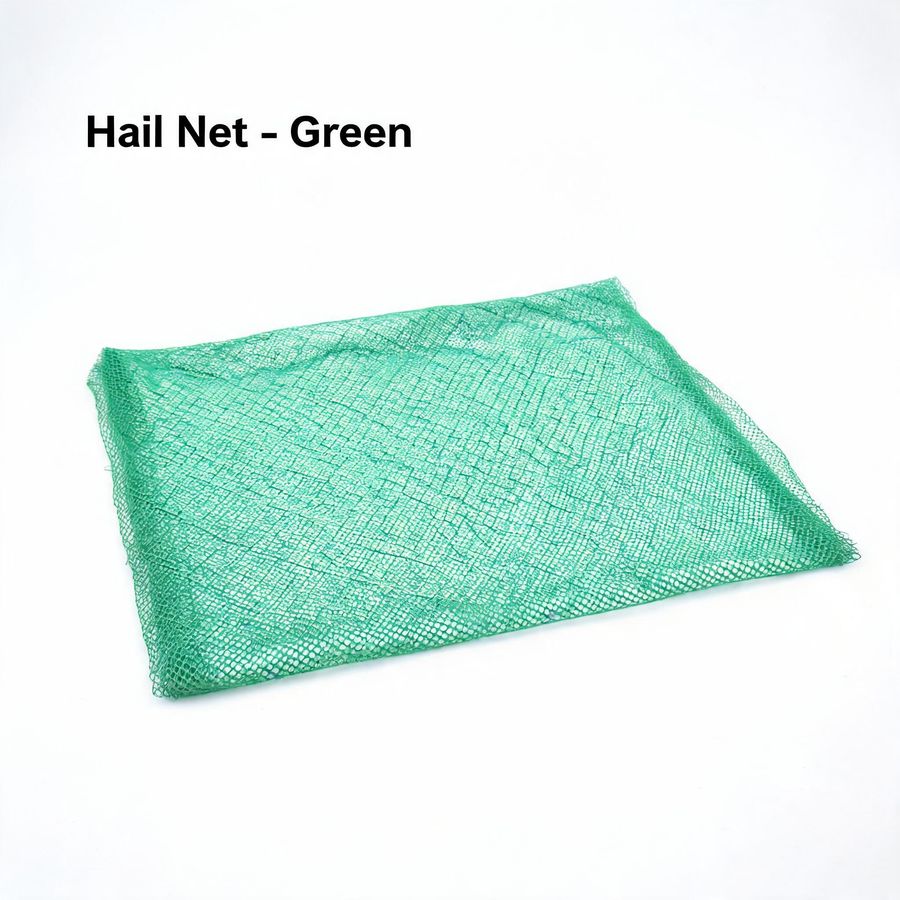
Cross-woven green anti-hail net installed over orchard rows on a steel frame
Hail nets fail for two reasons: the aperture is too large to break up the stone, or the structure is too slack to absorb the impact. A 2.5 × 3.5 mm cross-woven net at 70 g/m² handles typical European hail; exposed sites and larger stones justify 105 g/m² and tighter post spacing. The net must be tensioned on wire, never tied loosely to posts, or it whips in wind and tears at the eyelets.
Key points
Aperture 2.5–4 mm covers most hail; smaller cuts airflow.
70 g/m² for normal exposure, 105 g/m² for exposed and fire-retardant projects.
Post spacing 6–8 m across rows, 8–10 m along the row, net at 3.5–4.5 m.
Guide
Insect screens that still ventilate
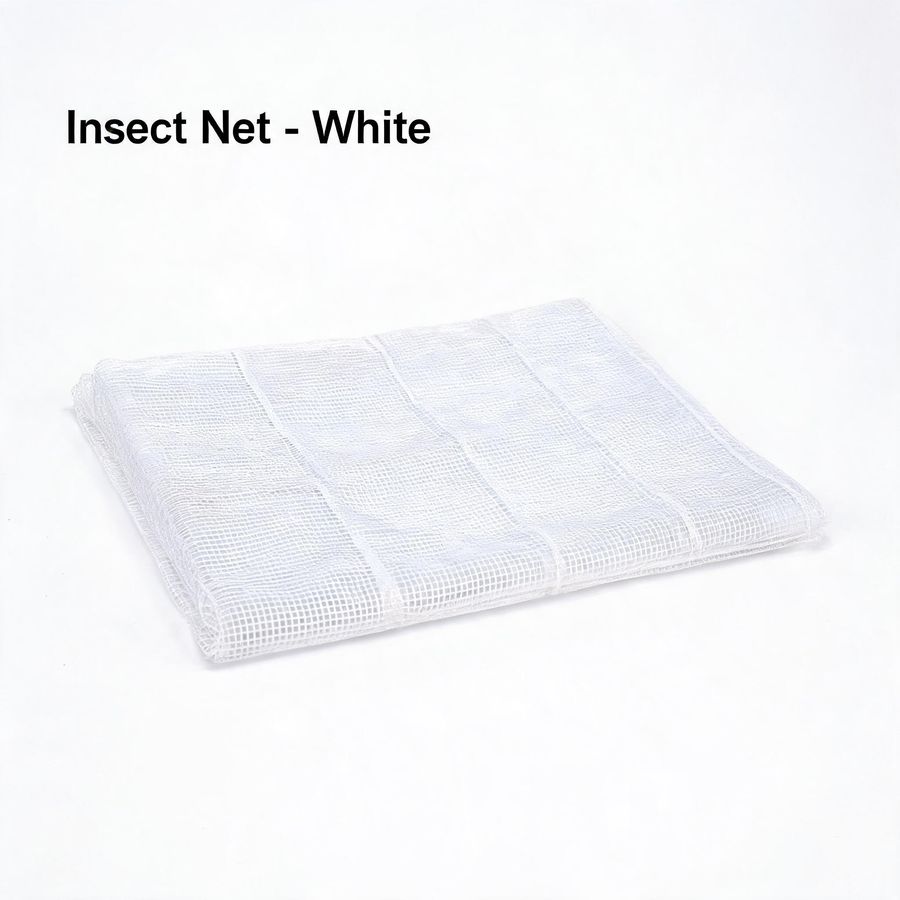
White anti-insect screen fixed over a greenhouse ventilation opening
Every insect screen trades airflow for exclusion. A 40-mesh (0.35 mm) thrips screen can cut airflow by 45–50% against an open vent, which raises humidity and can cost you more in fungal disease than the thrips would have. Choose the coarsest mesh that excludes the pest you actually have: 1.4 mm for fruit fly, 0.8 mm for whitefly, 0.35 mm for thrips — and increase vent area to compensate.
Key points
Match mesh to pest, not to the finest available.
White screens diffuse light, which many crops prefer.
Seal the structure: a 1 cm gap defeats any mesh.
Guide
Bird netting mesh size: sparrows versus pigeons
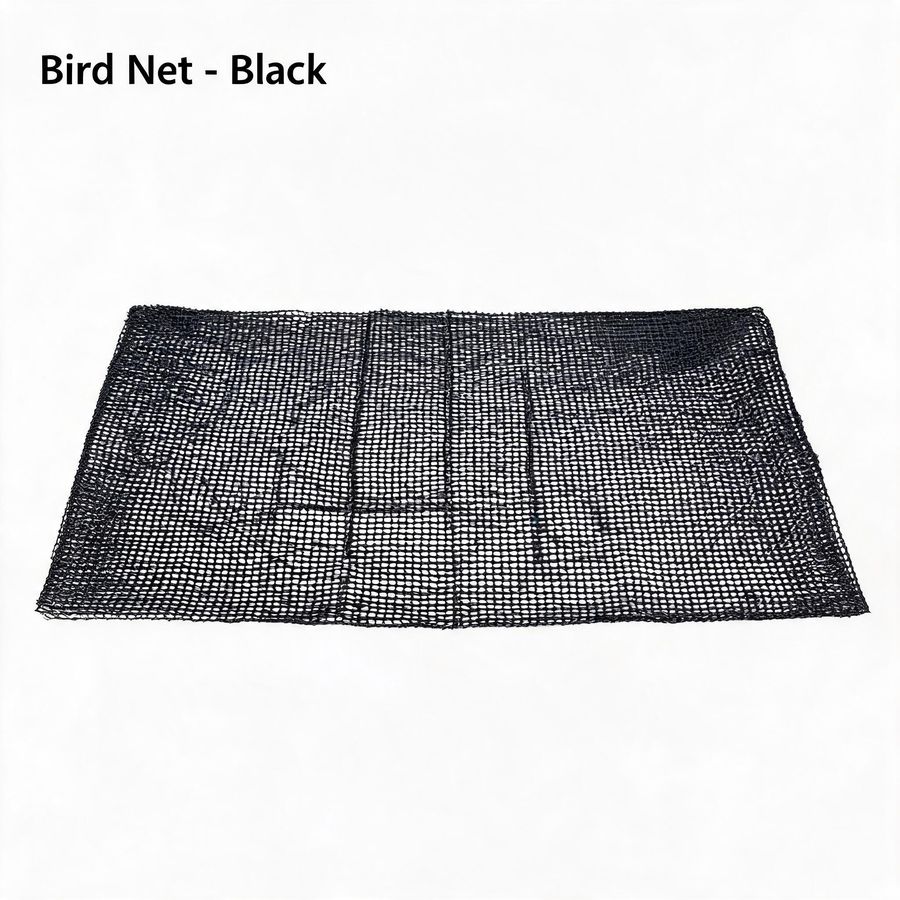
Black knotted bird protection netting, 19 mm mesh, laid over orchard rows
Mesh size follows the bird. Sparrows and finches need 19 mm; pigeons and gulls need 40–50 mm because they are larger and push at the net rather than squeezing through gaps. Wildlife-safe 5 mm diamond net is soft and highly visible and is the right choice where collision risk matters. Black is least visible against foliage, white is most visible to birds.
Key points
19 mm for small birds, 40 mm for pigeons and gulls.
Tension the net so birds bounce rather than tangle.
Keep 30–50 cm between net and fruit to avoid rub.
Guide
What density does an archery backstop really need?
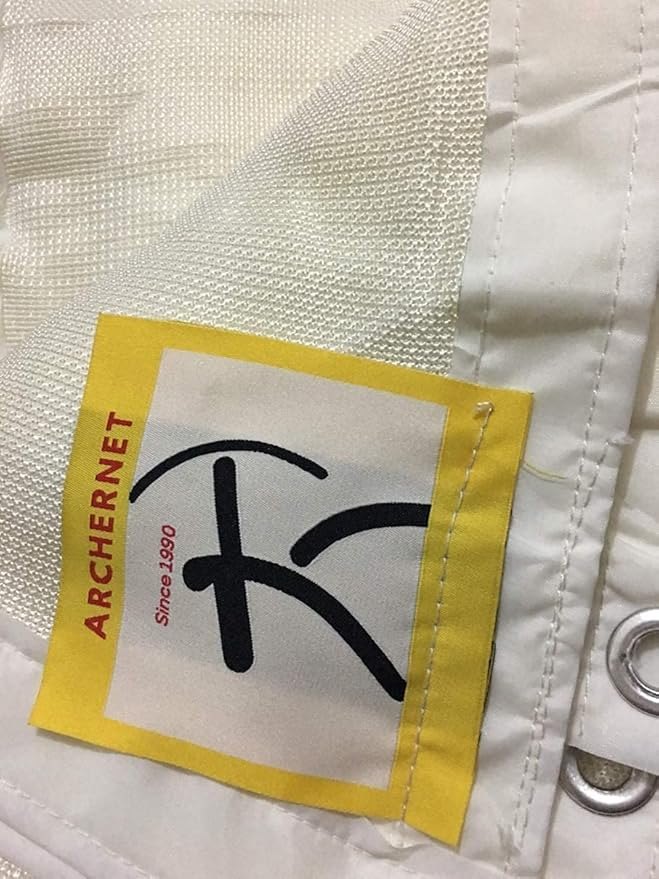
White 550 g/m² nylon monofilament archery backstop netting, stitched edge with grommets
The industry has settled around 550 g/m² for modern compound bows; lighter 350–450 g/m² nets are common at the low end but pass arrows sooner and wear faster. Yarn type matters as much as weight: nylon monofilament elastically recovers, while polyethylene transfers shock to the fixing points. Warp knitting (interlocked loops) beats knotting because there is no knot to concentrate stress.
Key points
430–450 g/m² up to 40 lb; 560–600 g/m² for 50 lb and crossbows.
Double-stitched edges and a top cable, not eyelets alone.
Guide
Sports netting ply explained: 36, 48 or 60?
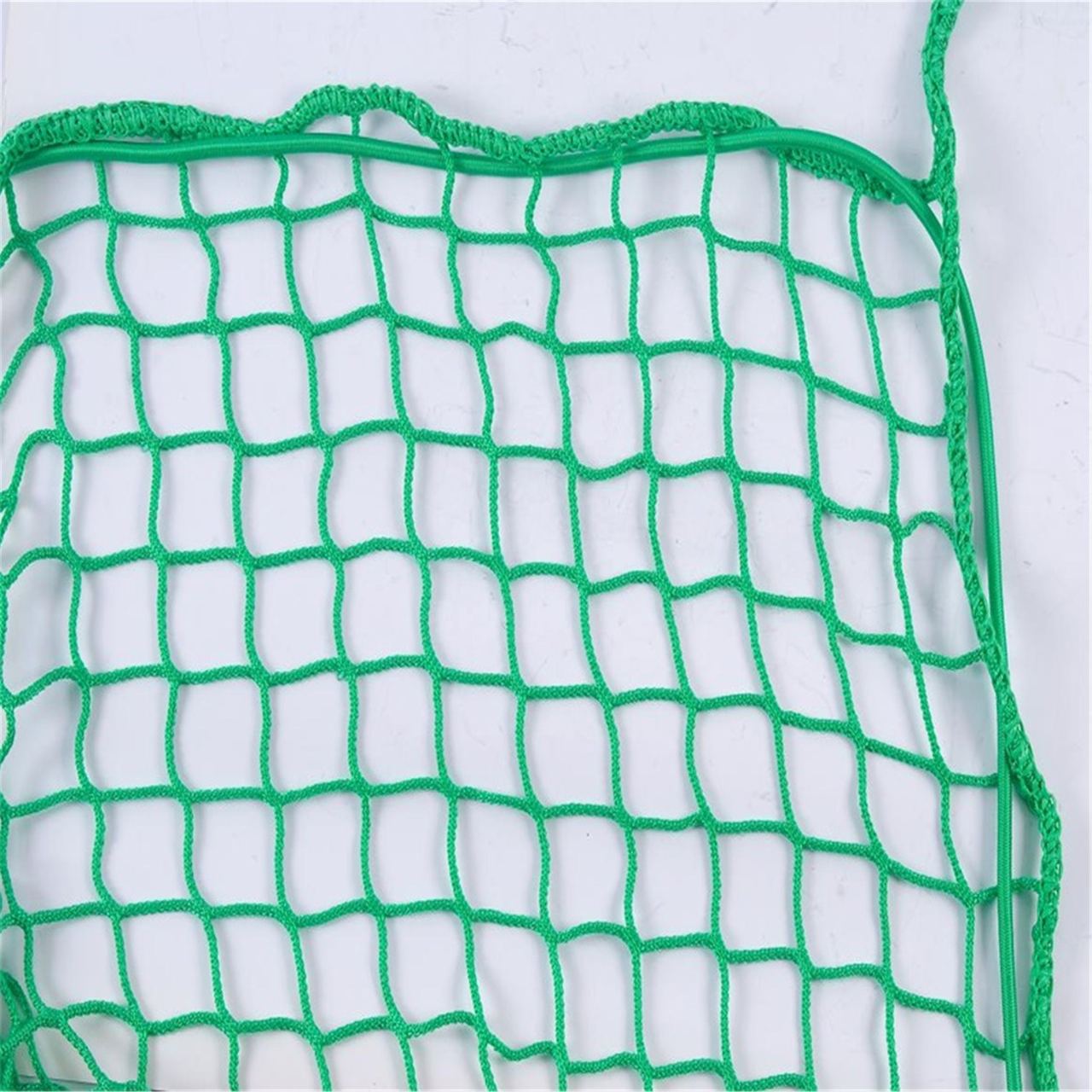
Green knotted sports barrier netting - strand construction visible at 48-ply
Ply is the number of yarn strands in each net strand. 36-ply is light ball-stop for gardens and low-impact training; 48-ply is the standard club grade; 60-ply is high impact for cricket, golf and hard-ball sports. Moving from 48 to 60-ply raises breaking strength significantly but also weight and cost, so specify by the ball, not by the price list.
Key points
36-ply: light, domestic, low impact.
48-ply: club standard at 2.5 mm strand.
60-ply: cricket, golf, hard ball, 2.9 mm strand.
FAQ
About these guides
Who writes these guides?
Our sales engineers and weaving team. Every figure quoted comes from our own production records or from published standards such as ISO 9001, EN 13501-1 and World Archery equipment rules.
Can I republish an article?
Yes, with a credit and a link back to this page. We can supply a version with images on request.
Do you answer technical questions by email?
Yes — send the crop, climate and frame details and we will answer with a specification, not a brochure.
Need a quotation or a sample?
Send your size list, shade percentage or drawing — we reply with price, lead time and a freight estimate within one working day.