Get a quote
Home › Ciflower Anti-Hail Protection Netting

Ciflower Anti-Hail Protection Netting

Anti-hail netting that takes the impact, not your crop

Cross-woven hail nets in 70 and 105 g/m², cut and pre-joined to your row length, with reinforced edges and eyelets for overhead vineyard and orchard systems.

Request a quoteSee specifications

Anti-hail netting

Cross-weave hail protection for vineyards, orchards and berry tunnels

Hail damage is not gradual — one storm can remove a season's crop and scar the wood for the next. Hail net works by absorbing kinetic energy across a woven grid and transferring it to the support wires, so the ice breaks up or bounces off instead of hitting fruit.

Our hail nets are cross-woven rather than knitted, which gives a stable aperture under load and much higher tear strength at the same weight. Standard weights are 70 g/m² for general crop cover and 105 g/m² for exposed sites and fire-retardant projects. Edges are reinforced and eyeleted, and panels can be pre-joined to your row length.

The relevant number is the aperture, not the 'mesh count'. We quote millimetres: 2.5 × 3.5 mm, 3 × 4 mm and 4 × 4 mm are the working sizes, each with a measured light transmission figure.

SpecificationDetails
ConstructionCross-woven HDPE monofilament, reinforced edge
Weight70 g/m² and 105 g/m² (fire-retardant option)
Aperture2.5 × 3.5 mm · 3 × 4 mm · 4 × 4 mm
Light transmission85–90% depending on aperture and colour
Width2 m – 12.99 m in one piece, pre-joined panels on request
Roll length100 m standard, cut to row length
ColoursBlack, green, grey, white, red
UV packageHALS stabilised, 5–8 years typical
EdgeReinforced hem, eyelets every 50 cm or rope border
PackingRolled in poly, labelled, palletised
MOQ500 m² stock · 3,000 m² custom
Reference priceFrom USD 105 per roll (70 g/m² cross-weave)

Installation reference

Overhead systems, side walls and tunnel covers

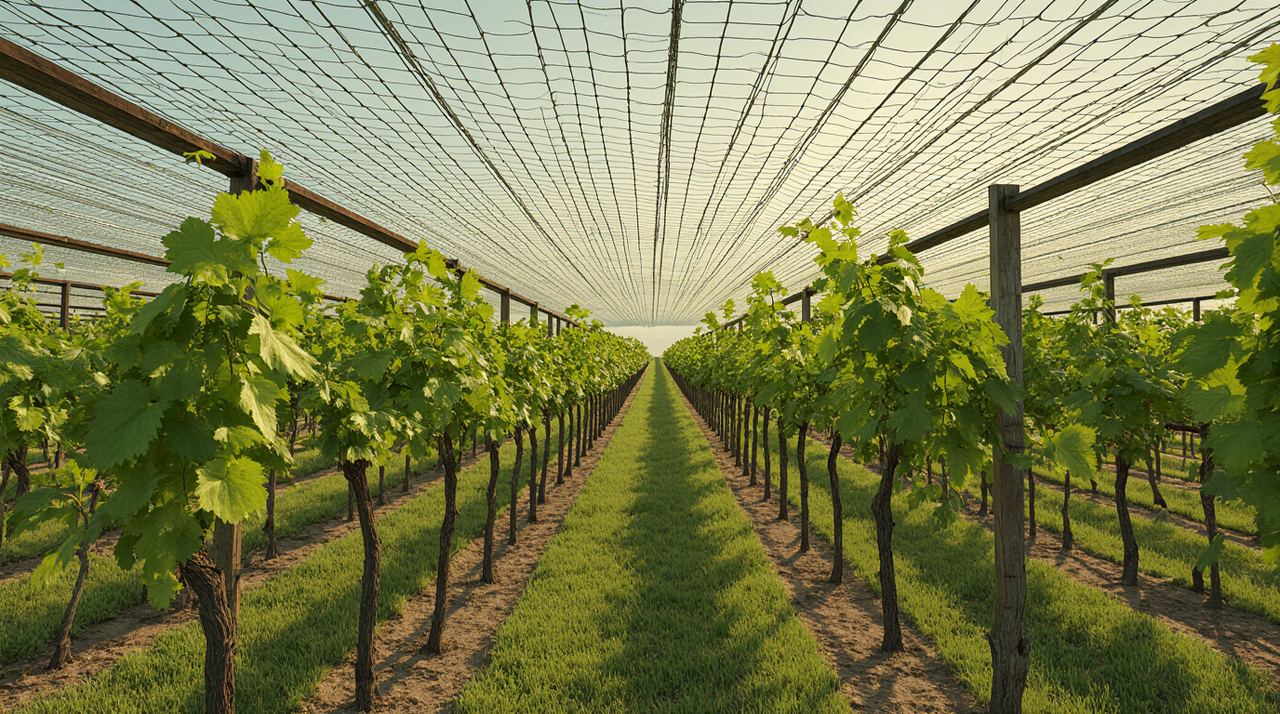
Hail protection net installed over vineyard rows in summerVineyard overhead
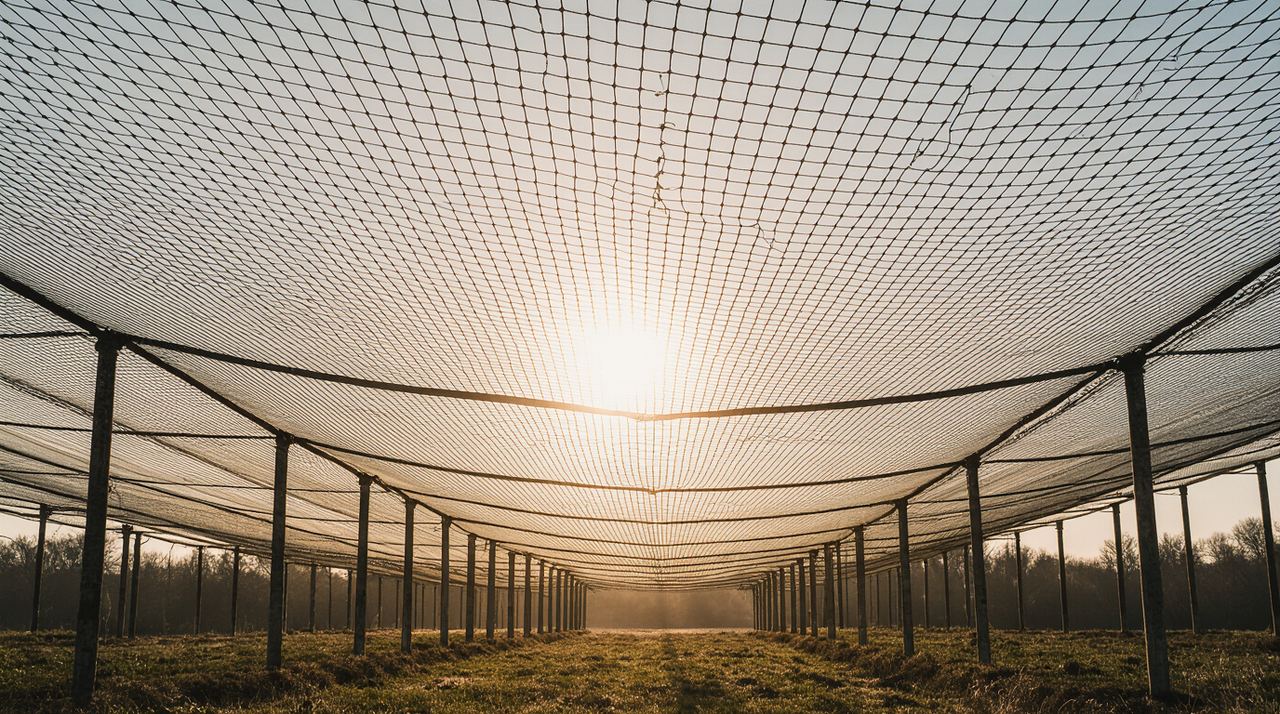
Orchard hail netting frame at sunset protecting fruit cropsOrchard frame
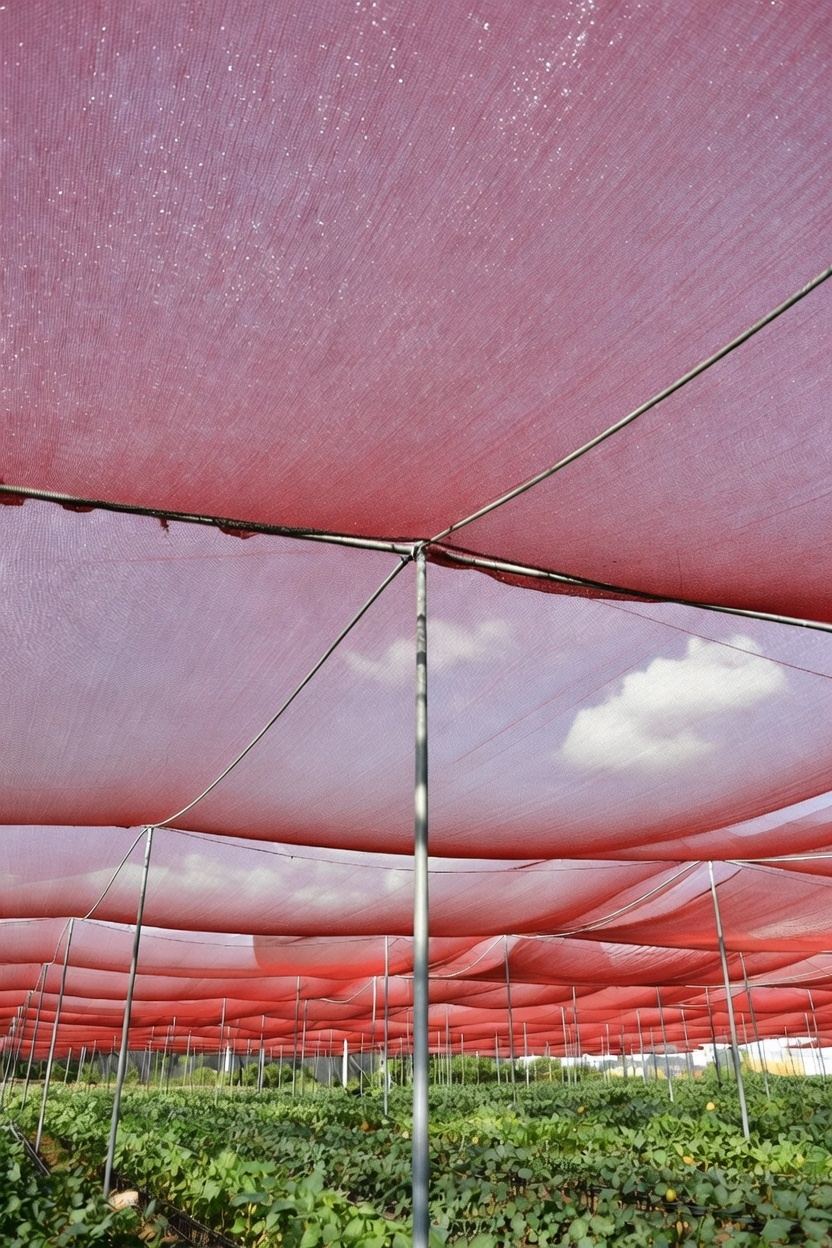
Red shade net over a greenhouse roof for light and hail controlTunnel cover

Vineyard and orchard overhead

Posts every 8–10 m along the row, cross wires every 6–8 m, net laid over the wires and tensioned at the headland. Net height 3.5–4.5 m above the fruit zone keeps the canopy ventilated and lets machinery pass.

Side-wall protection

Where wind drives hail almost horizontally, side walls matter more than the roof. We supply 2–4 m high side panels with eyelets top and bottom, fixed to the same posts.

Berry and vegetable tunnels

Hail net over hoops is usually 2–3 m wide, laid directly on the frame with a 30 cm overhang on each side and weighted skirts. For tunnels, a lighter 70 g/m² net is sufficient and easier to handle.

What we need to quote

  • Row length and row spacing
  • Post height and spacing
  • Crop and hail season
  • Wind exposure (coastal or inland)
  • Whether the net stays up all year

Hail net versus shade net: a one-minute comparison

 Hail protection netShade net
ConstructionCross-woven, stable apertureWarp knitted, flexible mesh
Primary jobAbsorb impact energyControl light and temperature
Typical weight70–105 g/m²80–300 g/m²
Light transmission85–90%5–50% (by shade factor)
EdgeReinforced, eyelets, rope borderRaw, hemmed or eyeleted
Best forVineyard, orchard, berry, exposed sitesGreenhouse, nursery, poultry, privacy

Many growers use both: hail net overhead for storm protection and a 50–70% shade net inside the tunnel for summer heat. They are different fabrics and should be quoted separately.

FAQ

Ciflower Anti-Hail Protection Netting questions buyers ask

What is the difference between hail net and shade net?

Hail net is a cross-weave fabric with a small aperture and high tensile strength, designed to absorb impact from ice without tearing. Shade net is knitted for light control, not impact. A shade net will stop some hail, but on a vineyard or orchard you want a cross-weave 70–105 g/m² hail net with reinforced edges and proper post spacing.

Which mesh size stops hail without blocking light?

2.5 × 3.5 mm to 4 × 4 mm covers most hail events while letting 85–90% of light through. Smaller apertures catch more ice but cut airflow; larger apertures let small stones through. We quote the aperture in millimetres so there is no ambiguity with 'mesh count'.

How far apart should posts be?

For overhead vineyard and orchard structures, 6–8 m between rows and 8–10 m along the row is typical, with the net tensioned on wire at 3.5–4.5 m height. Wind load, not hail load, usually governs the design — a slack net whips and tears at the eyelets.

Does the net need to be removed in winter?

In snow regions, yes: hail net is not designed to carry snow load. Roll it up on the wire and store it dry. In Mediterranean and East African climates it can stay deployed year-round, and we recommend washing it once a year.

Do you offer fire-retardant hail net?

Yes. Our 105 g/m² cross-weave hail net is available with a fire-retardant finish, testable to EN 13501-1 for projects where the local authority requires it.

What colours are available?

Black, green, grey, white and red are standard. Red and white are popular for light diffusion; black gives the longest UV life and the least visible structure.

What is the minimum order?

500 m² for stock specifications and 3,000 m² for a custom width or colour. Trial rolls of 100 m are available for first orders.

How is hail net joined when a row is longer than one roll?

Panels are overlapped by two mesh repeats and laced with UV-stabilised twine or joined with a stitching tape. We can pre-stitch panels to your row length so the installer only has to tension, not sew.
Need a quotation or a sample?

Send your size list, shade percentage or drawing — we reply with price, lead time and a freight estimate within one working day.

Request a quoteWhatsApp us