Super-wide shade cloth · 12.99 m
The widest HDPE shade cloth we can knit, straight off our own loom: 12.99 m across, 30–95% shade, heat-set and eyeleted. One drop covers a 12 m tunnel, so there is no seam to fail and no overlap to leak daylight.
Super-wide shade cloth
Most shade cloth in the world is knitted 4–6 m wide, because that is the width of a standard Raschel machine. Cover a 12 m tunnel with it and you are sewing three drops together, adding two seams, two rows of overlap and two extra fixing lines that nobody asked for.
Our widest loom knits 12.99 m in a single piece. It is the same HDPE, the same shade factor and the same finishing line as our standard rolls — the only difference is that the panel arrives as one sheet, so the weakest points in the installation disappear.
That width exists because we build our own looms. Since 1999 we have widened, retuned and rebuilt the machines in our own workshop, so the maximum width is set by our engineering, not by what a machinery supplier is willing to sell.
Super-wide cloth is normally specified for 10–12 m greenhouse tunnels, poultry and livestock houses, orchard rows, car parks, construction screens and large shade structures — anywhere the span is wider than a standard roll and the buyer is tired of seams.
| Specification | Details |
|---|---|
| Maximum width | 12.99 m in one piece — seamless |
| Standard range | 1 m – 12.99 m, slit to your exact width |
| Wider than 12.99 m | Joined with double-stitched lap seam, 30 cm overlap |
| Weight | 55 / 65 / 80 / 150 / 180 / 200 / 250 / 300 g/m² |
| Shade factor | 30% / 40% / 50% / 70% / 75% / 80% / 90% / 95% |
| Roll length | 25 m / 50 m, or wound to your handling length |
| Packing for 12.99 m | Folded bale 3–3.5 m for forklift loading |
| Width tolerance | ±1–2 cm on 4 m rolls · quoted per order above 6 m |
| Edge options | Raw, hemmed, eyelets @50 cm, rope border |
| UV package | HALS + UV stabiliser, 3–10 year service life |
| MOQ | 500 m² per colour (stock) · 3,000 m² (custom) |
| Lead time | 7–12 days stock · 18–25 days custom |
The arithmetic
Same structure, same shade factor, four different roll widths. The only numbers that change are the seams, the fixing lines and the labour.
| Cloth width | Drops needed | Seams to sew | Fixing lines | Cloth bought |
|---|---|---|---|---|
| 3 m (10 ft) | 4 | 3 seams | 5 lines | 12 m + 3 × 0.3 m overlap = 12.9 m |
| 4 m | 3 | 2 seams | 4 lines | 12 m + 2 × 0.3 m overlap = 12.6 m |
| 6 m | 2 | 1 centre seam | 3 lines | 12 m + 0.3 m overlap = 12.3 m |
| 12.99 m | 1 | none | 2 lines (both eaves) | 12 m, no overlap |
Why seams fail first. A seam is a line of needle holes through a UV-stabilised fabric, backed by a thread that ages faster than the cloth. It is also a 30 cm overlap where two panels move independently in wind. In service, the centre seam of a wide tunnel cover is usually the first place to open, and the first thing a customer complains about. Remove the seam and you remove the failure mode.
Where it goes
A 12 m span covered in one drop from eave to eave, with the fixing line only at the gutters — the classic case for super-wide cloth.
Wide roofs and side curtains in one piece, so the net cannot flap open at a seam during a storm.
Rows 10 m apart covered as a single sheet, with no centre seam catching on branches or machinery.
Long spans between steel posts, where a seamless panel looks better and needs fewer cables.
Dust and debris screening across a site boundary, eyeleted along both edges for quick tensioning.
Large sail-like covers and pergola runs where a visible seam ruins the finish.
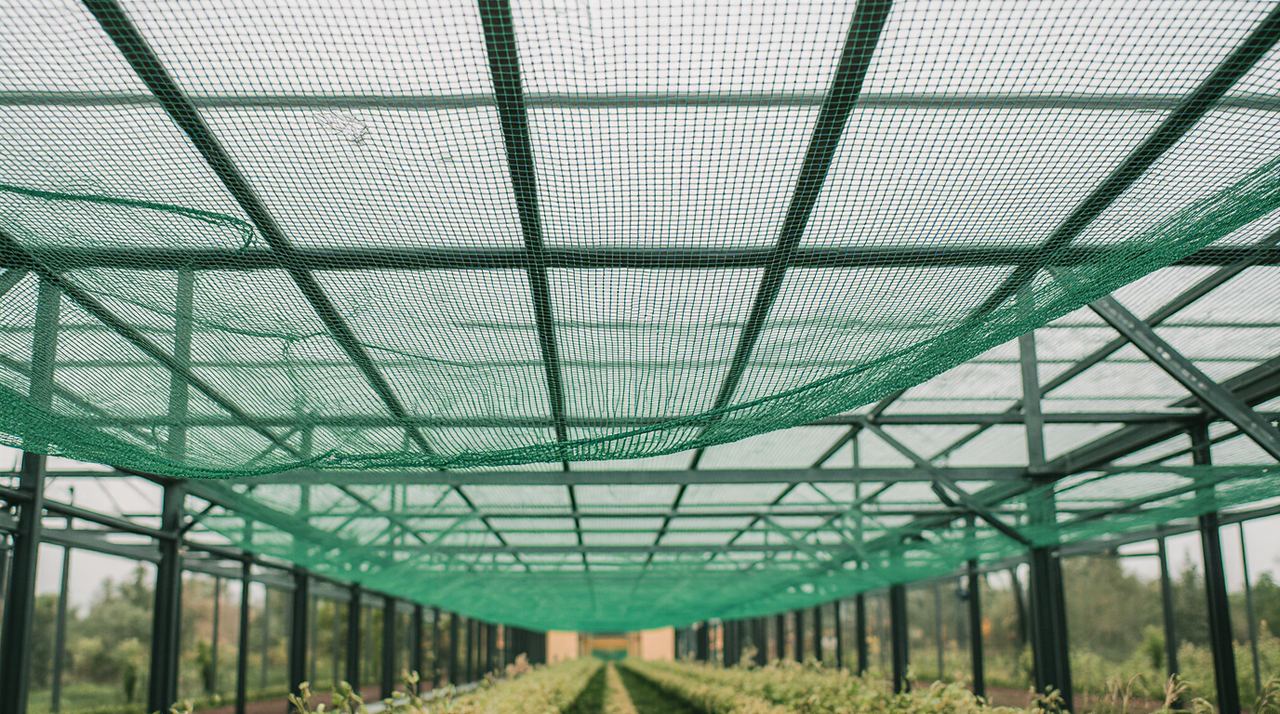
10 m tunnel, one drop
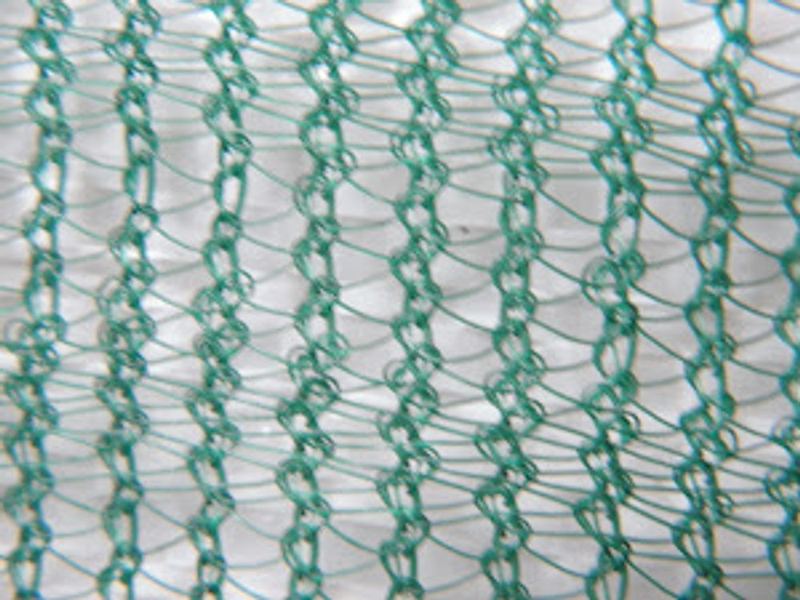
Wide-span agriculture
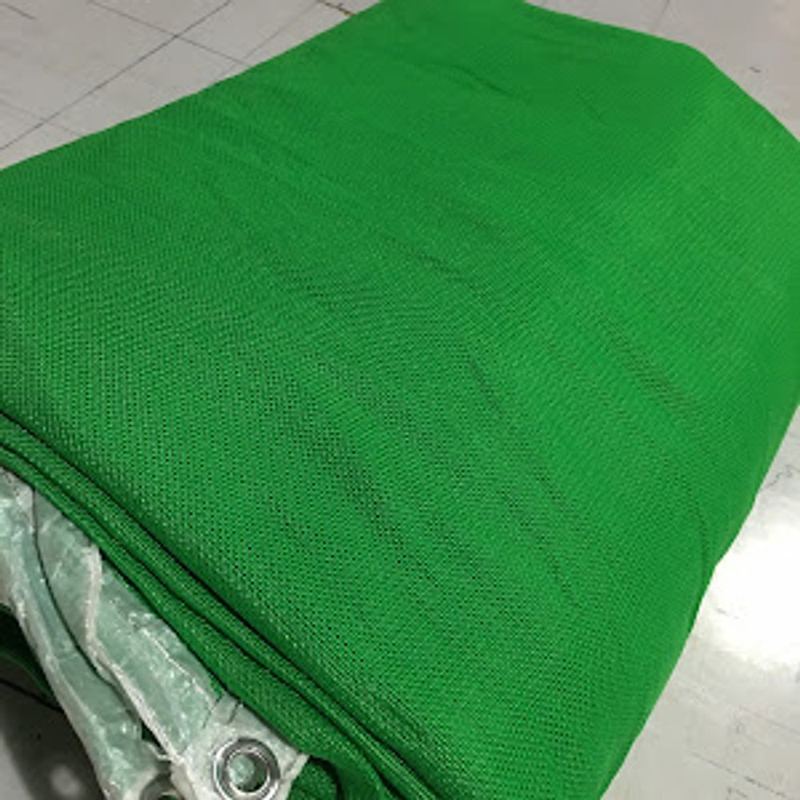
Off the wide loomInstallation
A wide panel behaves differently from a narrow one: the middle of the span carries more slack, and the tension you put on the edge decides whether the sheet flutters or sits still in wind.
Every super-wide order can leave Shanghai as a complete kit: cloth cut to width, eyelets at 50 cm, rope border or taped hem, plus cable, turnbuckles, clips and posts quoted on the same packing list.
Loading note. A 12.99 m panel folded to a 3–3.5 m bale loads like a pallet and needs no special handling at destination. Tell us whether your warehouse unloads with a forklift, a crane or by hand, and we pack to that method.
FAQ
Woven in one piece on our widest Raschel loom — one warp beam, one take-up, no stitching anywhere across the panel. Any mill can sew two 6 m panels together and call it 12 m; ask for the loom sheet and the width before finishing. Ours is 12.99 m off the machine, then heat-set so the mesh stays square.
Normally as a folded bale, 3–3.5 m long, which loads with a forklift and fits any 20 ft or 40 ft container. If you prefer rolls we wind to your handling length — the limit is your doorway, not our loom. Tell us the unloading method at your warehouse and we pack to suit.
Any 12 m span needs slack allowance and a properly tensioned support line. We quote 3–5% slack across the width, a cable or pipe at the top edge with posts every 5–6 m, and eyelets at 50 cm centres. Heat-set cloth holds its shape better than unset cloth, which is why the wide panels we ship do not drift out of square.
Yes. Width and shade factor are independent settings at the loom — 30%, 40%, 50%, 70%, 75%, 80%, 90% and 95% are all available in the full width range, in black, green, white, grey or a Pantone-matched colour.
Then we join panels with a double-stitched lap seam and a 30 cm overlap, or supply two panels for you to overlap on site. For spans above about 16 m we usually recommend two drops with a centre fixing line anyway, because a single 20 m sheet is hard to tension and hard to handle in wind.
500 m² per colour for stock specifications, 3,000 m² for a custom width or colour. Stock colours ship in 7–12 days; custom runs take 18–25 days plus 3–5 days for finishing. Samples of the exact width can be cut from the first metre of the run.
Send your size list, shade percentage or drawing — we reply with price, lead time and a freight estimate within one working day.